Eight Hours to One: Vadim Bozhko’s Faster Homepage Workflow
Vadim Bozhko on using Skelementor to move through wireframing faster, establish strong UX foundations, and spend more time on each project's design details.

Vadim Bozhko, Creative Director at bozh studio.
A design-first approach to websites
Vadim Bozhko is the Creative Director of bozh studio, a Sacramento-based website and logo design agency guided by a “less, but better” philosophy. His background spans physical products, photography, and digital experiences.
Before choosing colors, typography, images, or effects, Vadim works to understand the business, its audience, and the purpose of the project. From there, he begins with the website's structure, usually starting with the homepage.
Starting with the foundation
After gathering information from a client, Vadim moves into Figma to establish the page's foundation. He works out which sections belong on the homepage, what information deserves attention, where calls to action should appear, and how visitors will move through the page.
Those choices shape the experience long before visual polish begins. They also used to take a substantial amount of time to lay out.
“I always start foundational first. So structure first.”
Eight hours before the visual design began
Vadim previously built homepage blocks manually or searched for Figma templates and other structural resources. He estimates that drafting a homepage structure could take around eight hours before he reached the full visual design.
That time included careful thought about the client's needs and the psychology of the page. It also included manually rebuilding arrangements and patterns he had used on earlier projects.
Finding useful structures in the library
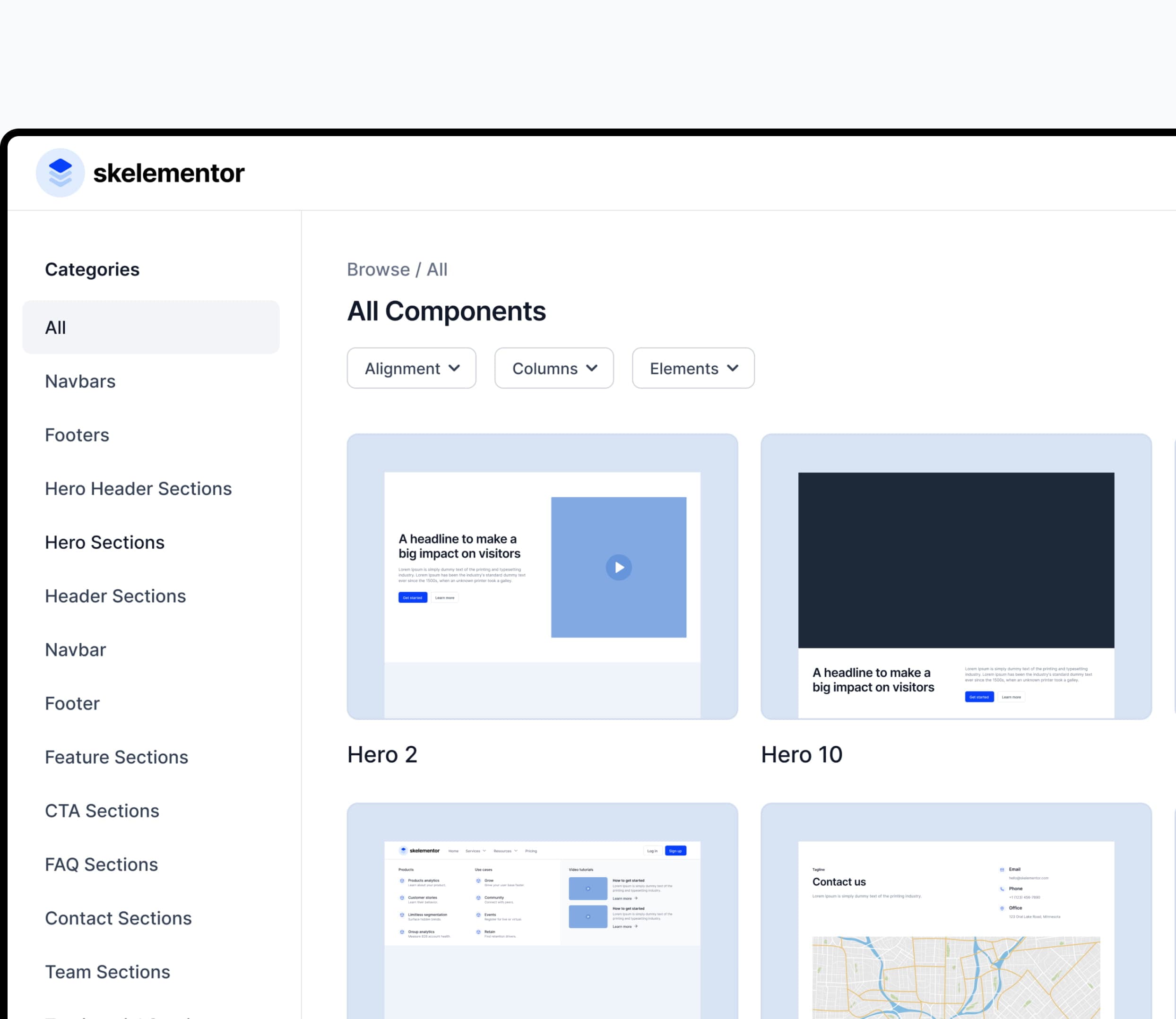
Skelementor lets Vadim browse established layouts for hero, about, FAQ, contact, and other common website sections. He can explore different content arrangements and choose a foundation that suits the project instead of constructing every possibility himself.
He values familiar UX and UI patterns that already work well. The component is a starting point for a thoughtful design, with room to make the final experience specific to the client.
“If a lot of these structural components and layouts have been working for years, then it just helps to use that as a starting point.”
From roughly eight hours to about one
The clearest change for Vadim is the time needed to establish an initial homepage layout. He estimates that a task that previously took about eight hours now takes roughly one hour with Skelementor as the starting point. For some projects, he says he can put the structure together in as little as 30 minutes.
These are Vadim's estimates for his own workflow. The saved time lets him move sooner into typography, colors, imagery, style guides, and the details that turn a sound structure into a distinct design.
“Instead of it taking eight hours for me to do that homepage layout, it took me like one hour.”
Getting to creative work sooner
Vadim still brainstorms, sketches ideas, considers the client's audience and goals, and decides how the page should work. Skelementor shortens the repetitive structural work so he can start refining the design sooner.
Once the blocks are in place, he can apply the typography, color palette, images, and visual details that make the project feel intentional and unique.
“I can start implementing styling. I can start implementing the fonts and the color palette and images... I can already take the next step and start going into the styling process a lot sooner.”
Using the same workflow in Figma
On larger projects, Vadim wants to spend time developing the design in Figma before building in WordPress. Skelementor's component workflow gives him a foundation during that design stage as well.
He can bring a relevant component into Figma, shape a concept around it, and continue refining before development begins. The studio remains responsible for the creative direction; the component supplies an efficient first layer.
Finding the right component quickly
Vadim points to the size and variety of the library as part of its usefulness. When a project calls for a particular number of columns, rows, or content arrangement, filtering helps him find a closer match.
That makes the workflow faster at two points: locating an appropriate structure and then adapting it to the client's needs.
“Just how robust and how clean your guys' library is has been very helpful.”
A foundation for a more intentional design
Vadim's work still begins with understanding the client and ends with decisions about aesthetics and usability. Buttons, typography, colors, imagery, and styling can all change after the initial layout is assembled.
For bozh studio, the shorter path to a homepage structure leaves more time for the work that gives the website its purpose and character. What once took around eight hours can now take roughly one hour, and sometimes less, by Vadim's estimate.
“You get the foundational blocks in place. And then the next step from there is just design.”