From a client brief to a clickable demo with Rutger
Rutger uses Skelementor to put working demos in front of clients, making website discussions more concrete without rebuilding his web workflow each time.
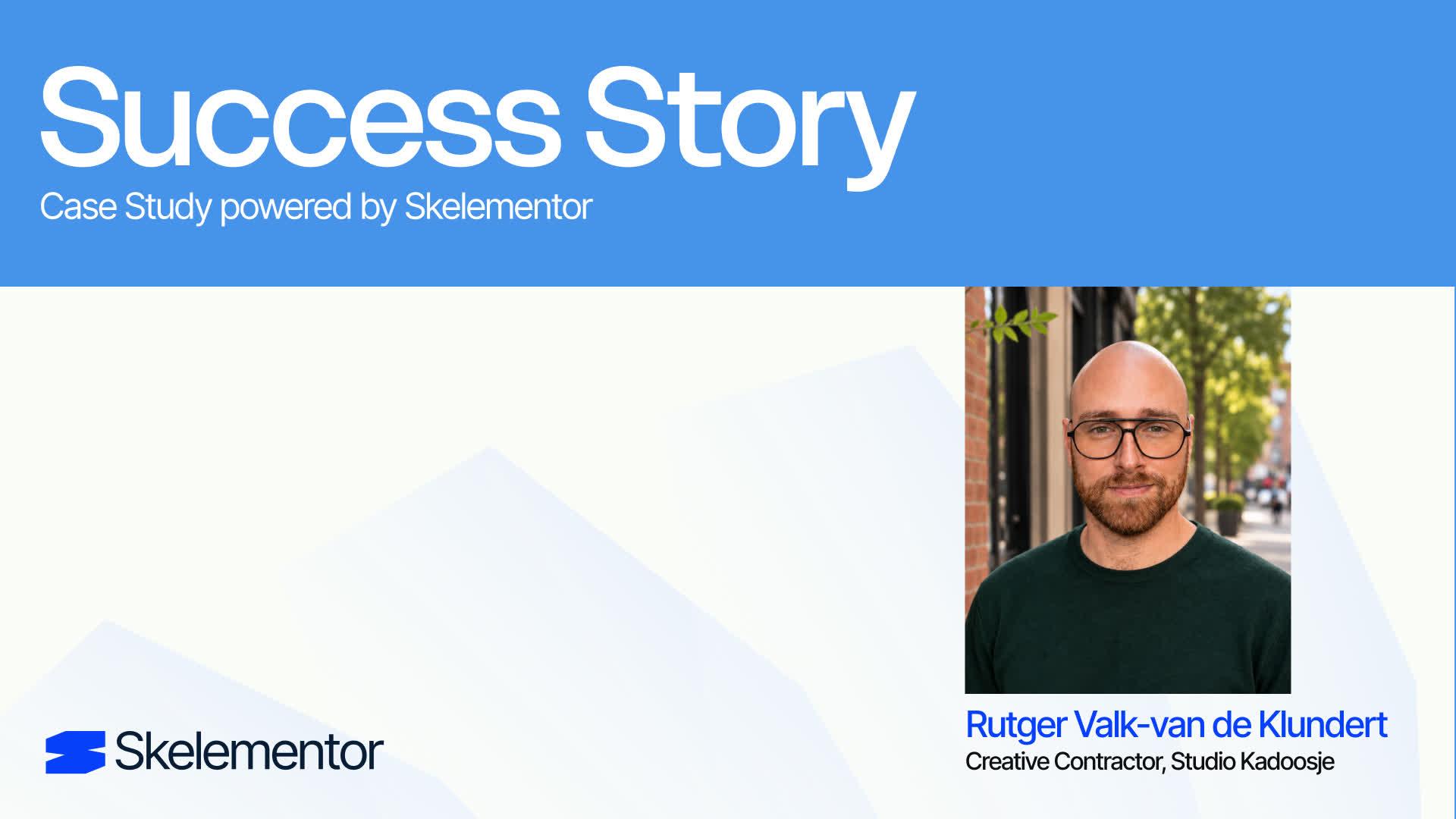
Rutger Valk-van de Klundert moves between different kinds of creative work. A website may be one project among product design, graphics, or physical manufacturing, so returning to web work needs to be straightforward. Skelementor gives him a familiar place to start. He can choose components, assemble a functional demo, and let a client respond to something they can use. His story is about making the early conversation clearer and getting useful groundwork in place before every visual detail is settled.
A creative contractor who also builds websites
Rutger describes himself as a creative contractor. He works across disciplines, including graphic and product design, packaging, 3D printing, laser cutting, and websites. Clients come to him with something they want to accomplish; he works out how to make it happen and whether to bring other people into the job.
That range is central to his use of Skelementor. Web development is part of his practice, but it is not his only daily activity. A tool that lets him return to a web project quickly has value because it fits the way his work changes from one assignment to another.
“I'm not a full-time web developer or website builder.”
Less relearning before a useful first draft
For someone who builds websites intermittently, the start of a project can include getting familiar with updated features and remembering how to achieve a layout. Rutger describes Skelementor as removing some of that initial barrier. He can identify components that fit what he needs and begin customizing them, without first taking a deep dive into everything that has changed.
There is also the work of agreeing on a direction with the client. He describes a possible cycle of design meetings, wireframes, testing, and more discussion, followed by the task of making the agreed design functional. He acknowledges that the drawn-out version he describes is an extreme example.
The underlying difficulty is recognizable: an abstract conversation can continue for a long time when the people involved have different levels of technical knowledge. Rutger wants to put something understandable in front of them sooner, so the next discussion can refer to a working page.
Give the brief a working form
Rutger describes a simple way to start. He can receive a list of the pages and features a client needs by email, then use Skelementor to assemble a demo. The first version does not need to contain the finished colors or a complete visual theme. It needs to communicate how the website works.
In his example, that means a demo people can click through, test on several devices, and review themselves. He can send it out so clients can see what is happening. A functional draft gives them a different basis for feedback from a conversation about a page they still have to imagine.
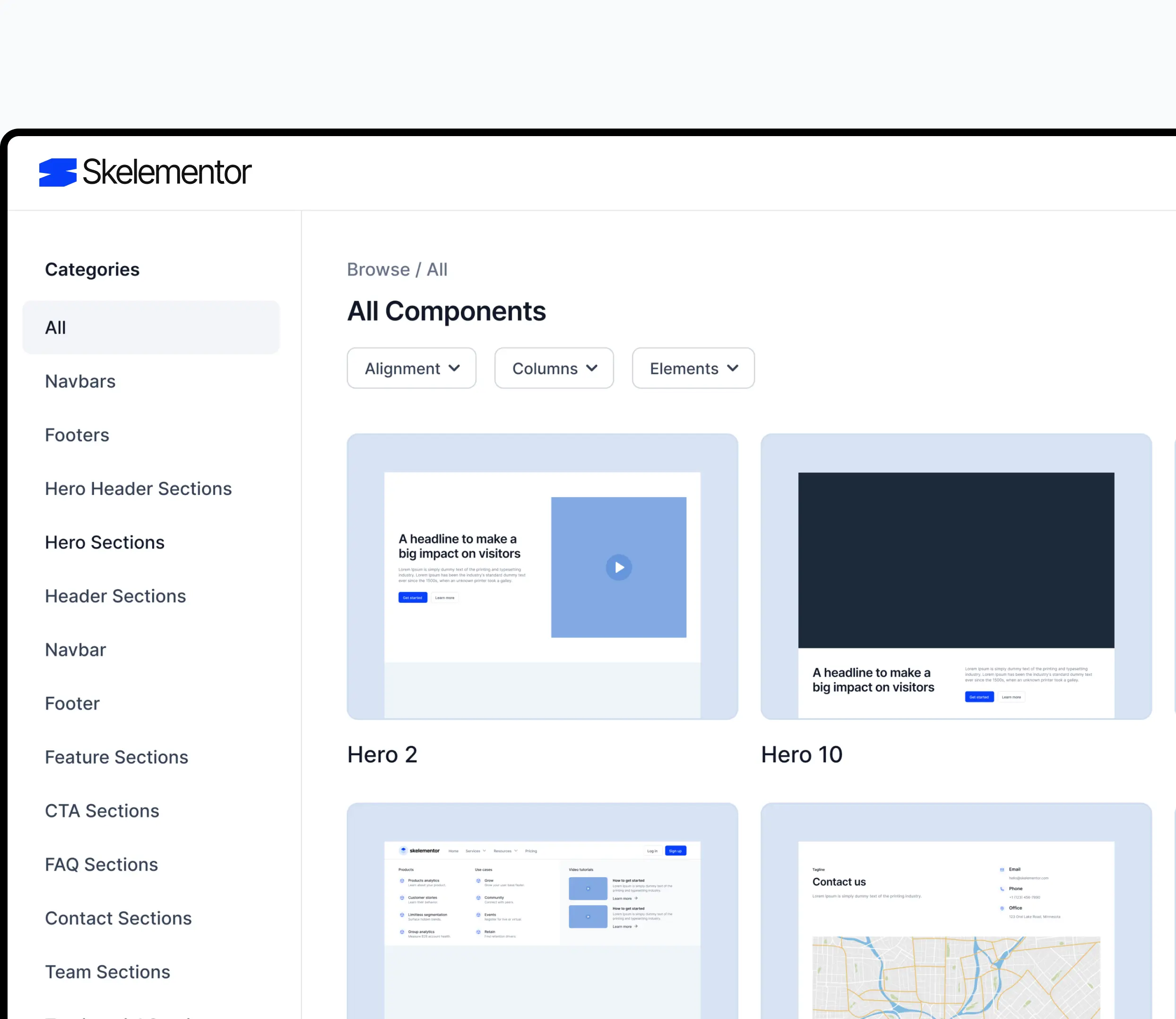
The component workflow is direct. He particularly likes copying a component's JSON and pasting it into Elementor. He can select useful pieces and combine them, then make the changes the project requires. He describes the experience as similar to building with Lego, where the parts already exist and the work is in choosing and arranging them.
He also brings the catalog into client communication. Sometimes he sends it to a client, explains that it is one of the tools he uses, and asks them to point out what they have in mind. That gives both people a shared visual reference before he continues building.
Branding still requires attention. He describes changing colors manually or downloading the JSON files and using find-and-replace across the components he needs before importing them. At the time of the interview, he wanted a color picker in the catalog so clients could see options closer to their own brand colors. That remaining task is part of his process, alongside the time the library saves in establishing the layout.
“It's like Lego for WordPress.”
A timing example with a clear boundary
Rutger offers an illustrative example: given a list of pages and features, he might have a working demo two to three hours later. He has not measured his overall productivity gain, and that example concerns a functional draft with styling still to finish.
Its immediate value is that people can understand the direction. They can click through the pages, look at them on different devices, and see how the requested pieces fit together. He can send the draft out for review, giving people a way to explore it themselves before the next conversation.
This matters when a client's expertise is in their own business. They do not need to know how to construct a website to recognize whether a working draft is close to what they have in mind. Rutger describes that shared reference as a way to reduce the back-and-forth involved in discussing a design and then turning it into something functional.
He also values being able to return to the same library when another WordPress job comes along. He can pick useful components, establish the groundwork, and begin customization without first exploring every updated feature in the builder. That suits a practice where the next assignment may involve a physical product or a graphic design task instead. The workflow gives website projects a familiar starting point while leaving him free to move between the different kinds of problems his clients bring.
Build enough to support a better conversation
Rutger's approach is useful when the first challenge is helping a client understand the proposed website. Start with the pages and features they need, assemble enough to demonstrate how those pieces work, and use that draft to gather feedback. Visual refinement can continue once everyone has a clearer reference.
For people whose work spans several creative disciplines, a familiar library can also make returning to websites easier. Rutger still applies his judgment, makes branding changes, and chooses how to solve the client's problem. The reusable components give those decisions a starting point. The practical test is whether a working draft helps the next conversation move forward, with less effort spent explaining a website that nobody can see yet.