From scattered templates to a repeatable workflow with Michael Mwanzia
Michael sketches his pages on paper, finds matching structures in Skelementor, and customizes them in Elementor, replacing the search through templates saved across old websites.

Michael Mwanzia already knew the value of reusable sections. The difficulty was remembering where he had saved them. A useful template might sit inside one of several previous websites, leaving him to log in and search before he could reuse it. Skelementor gave the Nairobi developer a shared place to find section structures for new work. His process now begins with a paper wireframe, moves to suitable components, and continues with the design choices he wants to make himself.
Independent work with a familiar WordPress stack
Michael runs Mick Web Agency and works as a freelance web developer in Nairobi, Kenya. Some clients come through social media, while contractors also bring him into teams to help move projects forward. He values being able to choose the work he takes on.
WordPress is his main platform, and Elementor has remained his preferred builder through years of development work. His use of Skelementor centers on business websites, including work for organizations, insurance businesses, and software service landing pages. Those projects need page layouts and visual structure, which are the parts of the process he describes most clearly in the interview.
Reusable work was spread across old sites
Before Skelementor, Michael saved sections from completed websites as templates. The approach gave him useful material, but retrieving it became difficult as the collection grew. He could remember that he had built something suitable without remembering which website contained the saved version.
Finding it meant logging into previous sites and checking what could be downloaded. Reuse involved a search through his own project history before he could bring the section into the next build. The templates existed, but they were scattered across separate websites.
He had also worked with many themes, each requiring time to understand its setup. Some brought styling or other material he did not want. Switching to Astra made it easier for him to create his own templates, but developing those structures repeatedly still took effort. He wanted useful foundations while keeping control over the design he would create for the client.
“it's hard to remember which template you saved”
Start on paper, then find the structure
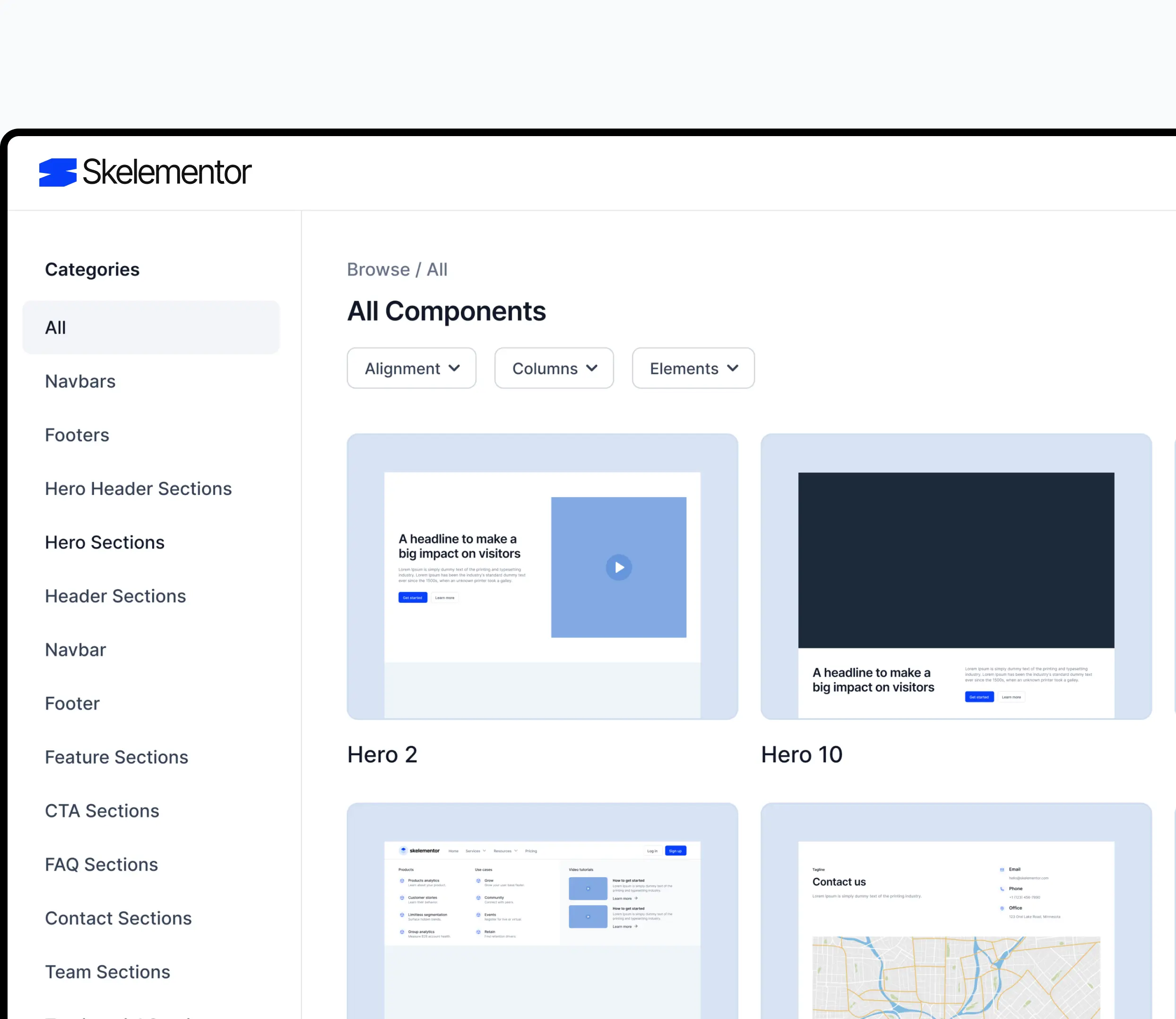
Michael begins a website with a piece of paper. He sketches the wireframes before opening the component library, giving himself a structure to look for. When he browses Skelementor, he can recognize sections that correspond to the arrangements he has already considered for the page.
He then copies suitable sections into the website. The library serves as a place to find that material without having to recall which old client site held a previous template. This fits his existing preference for building in Elementor and reusing structures that help him move the work forward.
He describes the process in stages. First he gathers components and sets up the website's structure. Then he turns to the design. That sequence gives the build a framework before he works through the visual details, while allowing him to customize what he has brought into the site.
Typography is one area where he finds a starting component helpful. He recalls struggling with font sizes and letter spacing alongside the other controls involved in a page. Beginning with a ready component lets him work from an existing arrangement and concentrate on adjusting it to the design he wants.
Michael also values the ongoing addition of sections and components. He follows Skelementor to see what is introduced and considers how different structures might be used. He describes the library as widening his options, giving him more possibilities than the templates he was producing from his own assumptions alone.
His use has a clear boundary: the business websites he discusses. For ecommerce, he says he continues to rely on familiar themes with product, archive, and checkout pages already defined. The workflow in this story therefore concerns the page structures he actively uses, including the customization that follows after those sections are in place.
A more consistent starting point for the next build
Michael reports improved productivity and greater consistency in his designs. He specifically mentions alignment, spacing, padding, and margins when explaining what he appreciates about the results. These are his observations from using the components in his own work, and they describe the visual foundation he wants a page to have.
The retrieval problem also has a clear answer in his new process. His paper sketch leads him to the library, where he looks for the sections he needs. The search begins with the page he wants to build, supported by a collection of available structures, instead of relying on his memory of previous websites.
He says website work has become quicker and describes a clear order for getting through it. Gathering the sections and setting up the structure form an initial stage. Design follows once those pieces are in place. His account ties the improvement to that sequence, with ready components available when he needs to establish the page.
Creative control remains important to him. He wants the section framework to be available while making the finished design his own. He is comfortable using AI to extend backend functionality, but he prefers to shape the design himself. The components give him a foundation he can customize for each website.
The tool's place in his freelance work also follows demand. Michael describes subscribing monthly during busy periods, when website builds make it useful to him. That fits the practical way he talks about the library: something he returns to when he needs starting components for the business websites he is building.
Give the sketch a place to become a page
Michael's process offers a useful approach for developers whose reusable work is spread across past projects. Begin by deciding what the page needs to contain. A simple paper sketch can be enough to identify the structures to look for, after which the relevant components can be brought into the website and adapted.
That order keeps the intended page in view while making the library easier to search with purpose. It also leaves room for the designer's own decisions about the finished appearance. For Michael, the repeatable part is finding and establishing the framework. The individual work continues as he turns that framework into a website for the business in front of him.
“I just prefer coming up with something which is unique”