When a client wants another option: Jackson’s approach to revisions
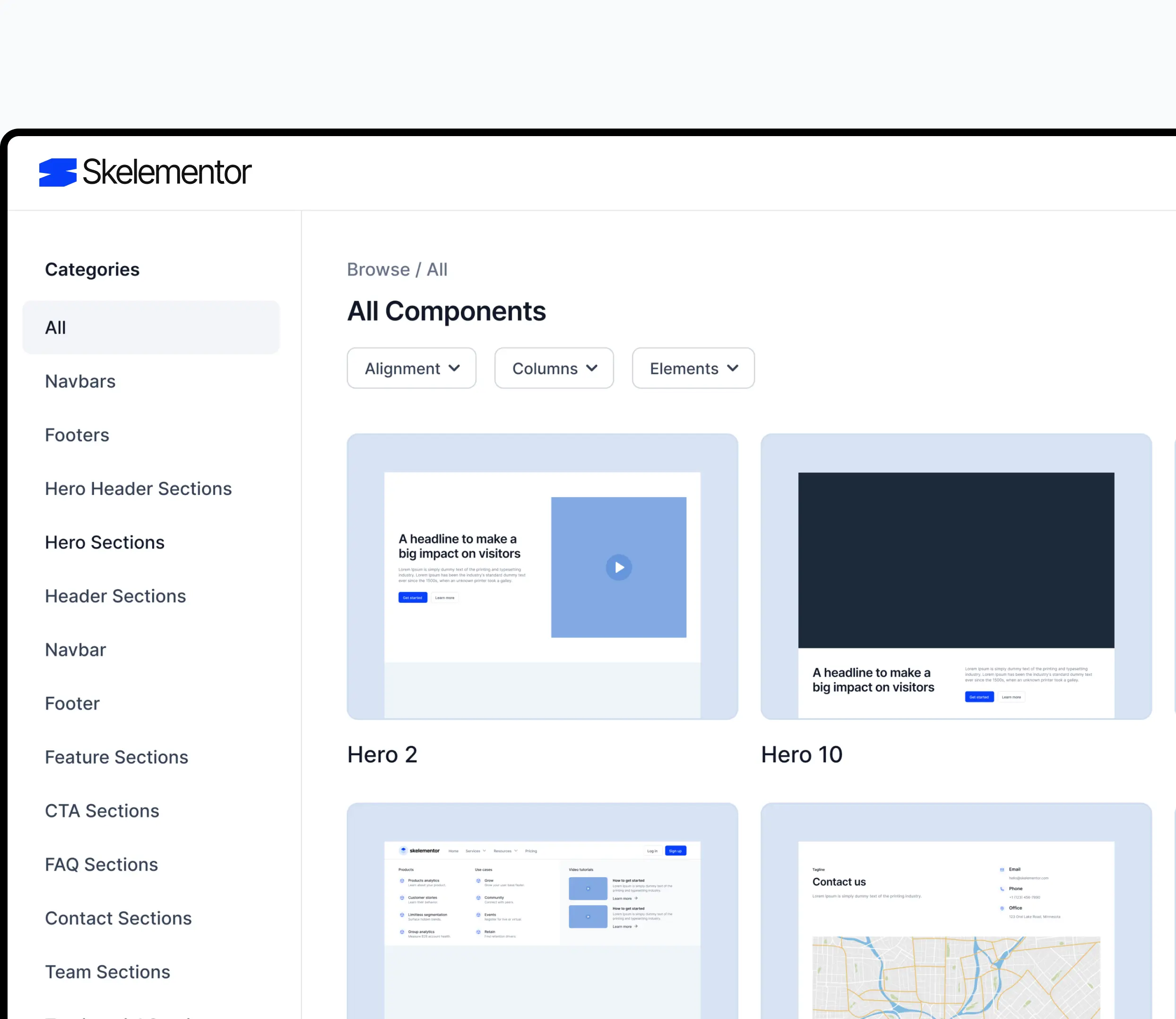
Jackson Monichan used Skelementor to assemble pages section by section, show clients alternatives, and change a layout without starting from a full-page template.

A client can like a website and still want one section to work differently. For Jackson Monichan, that familiar revision request was one reason Skelementor became useful. Instead of adapting a complete page template, he could assemble the page from separate sections and offer another version of the part the client wanted changed. His experience highlights a practical benefit of a component library: it gives a designer more options at the exact point where a project needs another direction.
From client brief to a live website
Jackson describes a small agency where he and his co-founder divide responsibilities. His partner looks after sales and marketing; Jackson takes over when the client comes in and handles development, launch, and ongoing maintenance. That role keeps him close to the decisions and feedback that shape a website throughout delivery.
He came into website work without a coding background. An early attempt to build a business website led him and his partner to make it themselves, and work for other people followed. That experience helps explain his preference for tools that make website building accessible while leaving room to serve a client's particular business needs.
When one change meant reshaping the template
Before Skelementor, Jackson's team used full-page templates. That gave them a starting point, but a page could contain sections they or the client did not want. Adapting those areas still meant development work, even though the project had begun from something already built.
The difficulty became more apparent during revisions. A client might reject a particular section or ask to see other ways of presenting the same information. In that situation, a complete page template was only part of the answer. The team needed alternatives for a smaller piece of the page.
Jackson describes clients wanting to see different variations of the same section. The problem he identifies is specific: finding and developing those alternatives takes time. A useful library needed to support the conversation after the first draft as well as the initial build, so that a change in direction could be handled with another appropriate layout.
“clients love revisions”
Choosing a section, showing it, and changing it
With Skelementor, Jackson could choose separate sections and combine them into a page. That changed his starting point. Rather than taking one default page and working through everything that needed altering, he could select the pieces relevant to the project and bring them together.
The same approach helped when feedback arrived. If a client did not like one section, he could look for another variation of that type of section. The library supplied options for the part under discussion, allowing him to respond to a request with a concrete alternative. He identifies that availability as an important source of time savings in his earlier workflow.
He also used the library before development. He could put a draft into Figma or show screenshots of candidate sections directly to the client. That gave the client something specific to respond to and helped him confirm the direction they wanted. The value was in reaching agreement around a visible layout before committing further development effort.
Consistency mattered alongside choice. Jackson appreciated being able to select different sections while working within a shared design system. He described the library's performance characteristics as another reason he used it, although he did not provide a test that isolates its contribution to a site's score.
This workflow fits his broader view of design. He wants the website to support the business goal, whether that means leads or sales. Appearance matters, but it needs to serve that purpose. Choosing an alternative section is therefore part of finding an effective presentation for the client's needs, rather than simply adding more visual variations to a page.
“the design should be aligned with the business goal”
A useful revision workflow, and a changing toolset
Jackson reports saving time when clients wanted alternatives, although he does not put a measured duration on those revisions. The improvement came from having another variation available for the part of the page under discussion. He could keep working with the client's feedback instead of rebuilding every alternative from scratch.
Regular additions to the library also mattered to him. He described receiving updates with new sections and variations and knowing there would be more material to work with the following week. That consistency was a reason he stayed interested in the service, even with other libraries available.
At the time of the interview, his toolset was changing. He said his direct use of Skelementor had decreased as he began using NovaMira with Claude to generate sections within his existing design system. He wanted a way for an AI tool to consult Skelementor's library as a reference; that was a request for a future connection.
His expectations still reflected the reasons he had valued the library: a wide range of sections, a shared design system, and a workflow that people without a coding background could use. He specifically asked that any new approach remain accessible to non-coders. For Jackson, the useful option is one he can bring into a real client project and use to reach an agreed result. His revision workflow shows how individual sections had served that purpose.
Give the client an alternative they can react to
Jackson's experience is useful for designers who regularly hear that one part of a page is not right yet. A practical response is to keep the discussion focused on that section, show a relevant alternative, and establish what the client is trying to communicate before developing it further.
Screenshots or a Figma draft can help make that discussion concrete. A shared design system can then support the work of bringing the chosen sections together. For a team testing this approach, the most useful comparison is the effort involved in a typical revision: finding an alternative, showing it to the client, and applying the agreed change. Those steps are where Jackson describes the library making a difference.