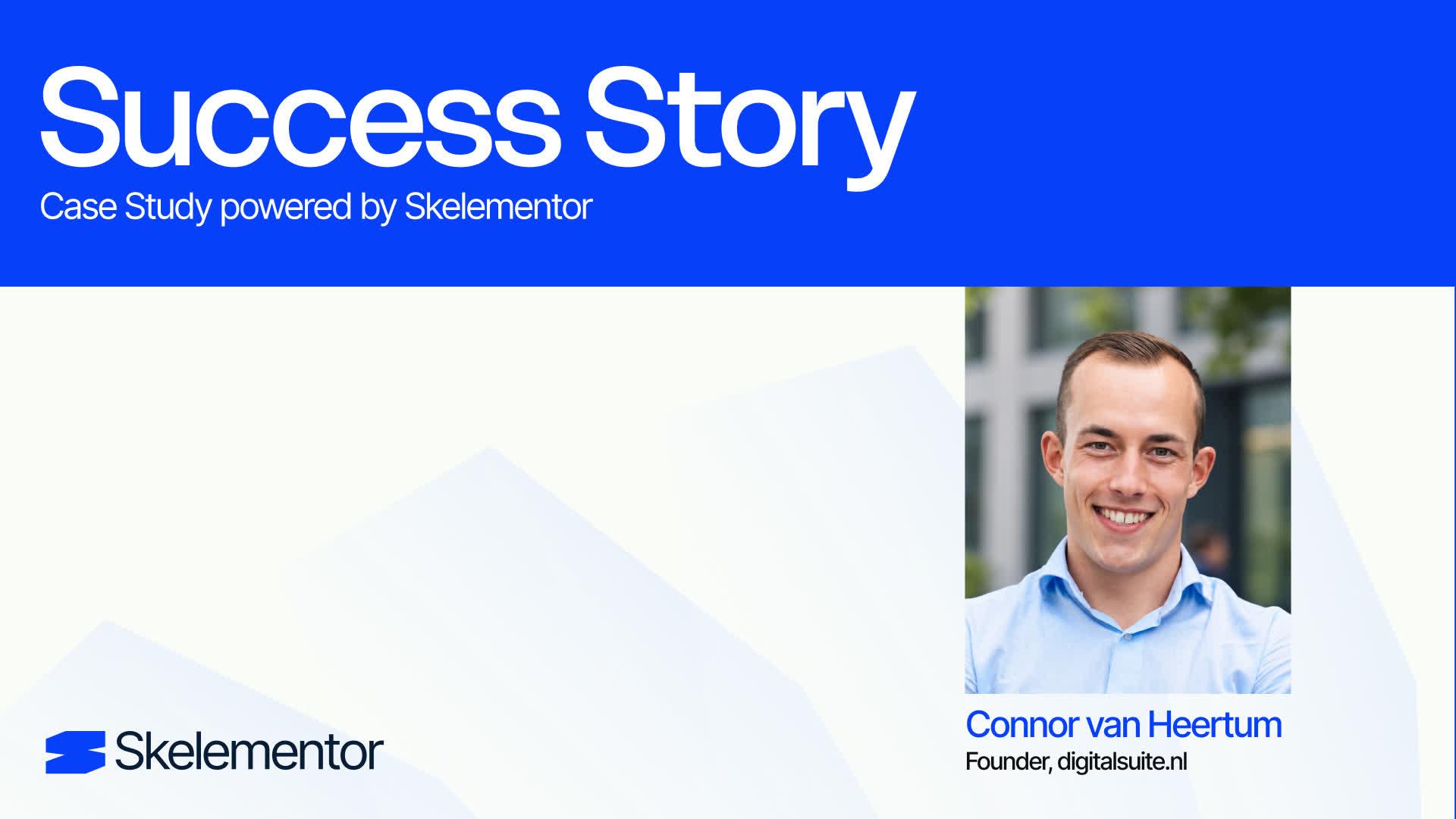
Testing the idea before the build with Connor van Heertum
For custom website work, Connor uses Skelementor to explore page structures, compare options, and find a direction before building the final design.
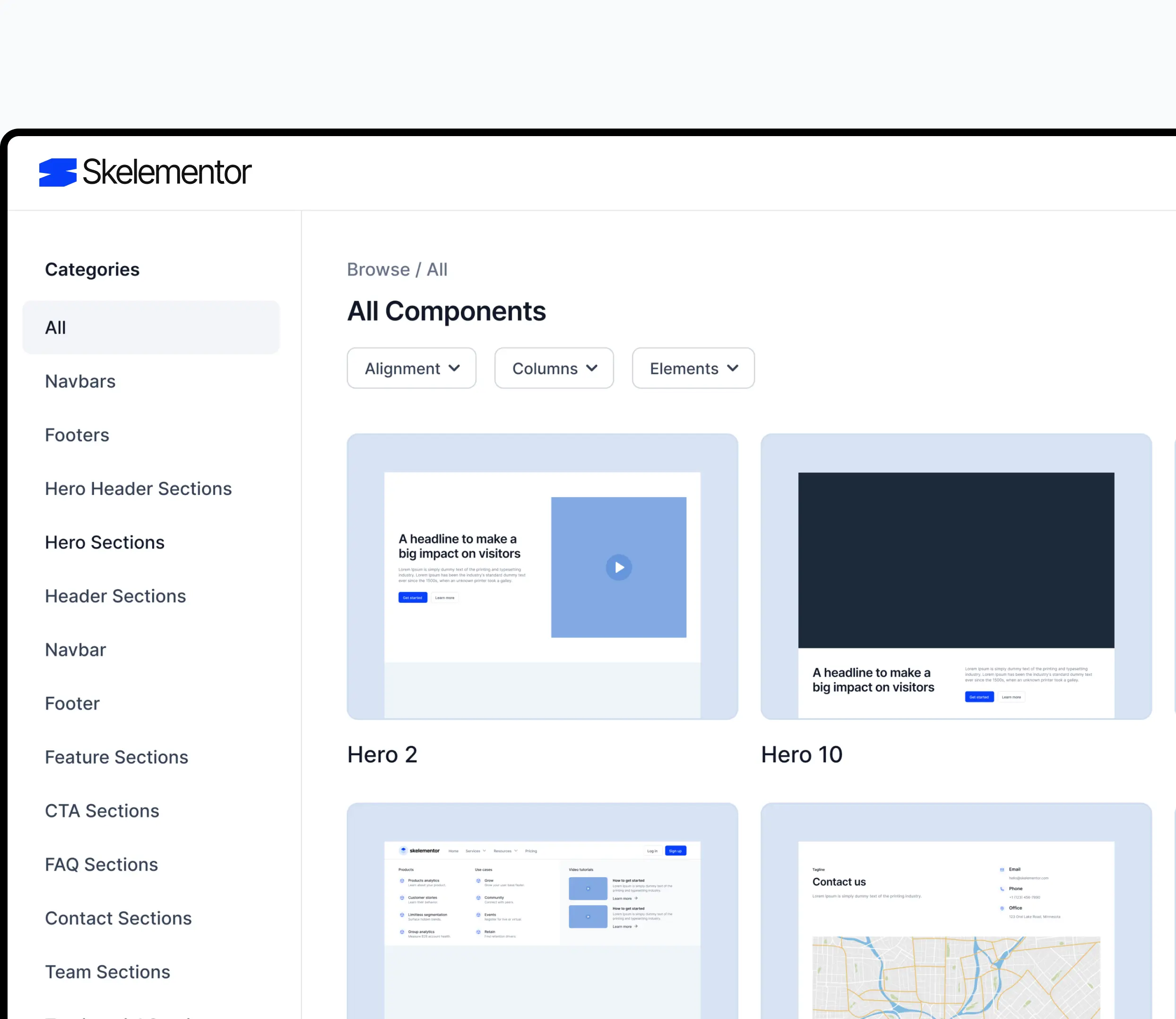
For Connor van Heertum, the first layout is a direction to test. He uses Skelementor to look for alternatives, try sections together, and see whether a page communicates what his client needs. An existing component might confirm his idea or suggest a different one. It might also become the basis for a heavily customized interaction. The library gives his exploration a starting structure before he commits to designing and developing the finished website.
A custom practice alongside a day job
Connor started his web development business in 2019 while studying software engineering. By the interview, he was working as a senior software engineer and continuing to take on his own client projects. His clients span different fields, including technical businesses, real estate, and a skincare clinic.
He mainly works alone, although he sometimes brings in another person for parts of the implementation. Design decisions and the final review still come back to him. With that level of involvement, a useful reference needs to support his own judgment about the interface. A ready-made section may be a starting idea even when it does not become the finished component.
An idea is easier to trust after testing alternatives
For Connor, the challenge is partly deciding how a website should communicate. A client has something to convey, and he develops an initial idea for the page. Testing that idea against alternatives can mean designing several different options himself. He described that ideation work as something that would probably take significantly longer without existing structures to try.
His adoption of Skelementor was not a straight line. He initially tried an annual subscription but canceled it when he was not using it much. Later, several clients wanted a faster approach, and the library became more useful. He returned with a lifetime license.
That history matters because his use depends on the work in front of him. He does not force every project through the same collection of blocks. For highly customized websites, he still expects to change the base layout substantially and sometimes build the final component himself.
Browse, combine, question, then build
Connor's process starts by browsing the library and looking at how sections could fit together. He writes down possible combinations on a notepad, tries them, and swaps sections as he develops the flow of a page. This gives him a rough structure he can evaluate before he commits to the detailed design.
Sometimes an alternative improves the idea he started with. Sometimes it helps confirm that his first choice was appropriate. Both are useful to him: the library gives him other arrangements to react to without requiring every option to be created from nothing. He described the process as a kind of playbook or rough sketch for the website.
He continues designing in tools such as Figma, and the amount of change can be considerable. At times it becomes faster to develop the final section himself than to keep adapting the supplied block. If a particular section already fits, he may import that individual block into the website. The decision follows the needs of the design.
One recent example involved a steps component arranged inside a boxed area. Connor liked the starting idea but wanted a different experience. He turned the structure into a horizontal sequence, with sideways movement tied to the visitor scrolling down the page. The component suggested a direction; he supplied the custom behavior.
That example explains why his use of Skelementor extends beyond direct reuse. A section can be valuable because it helps him see a possibility. The finished interaction may look and behave differently, while still having grown from something he encountered in the library. His contribution remains the selection, interpretation, and implementation of the idea.
“I'm using it more like an inspiration tool and a prototyping tool”
A clearer design decision is the result he can describe
The benefit is clearest while Connor is deciding what to build. Highly custom websites still involve substantial work after the initial layout, and he is unsure how much production time Skelementor saves him overall. The amount of customization changes from project to project. Exploring alternatives is the part of the process where he can explain its contribution most clearly.
He can try other structures, see how sections work together, and challenge an idea before investing in the finished design. He said the ideation phase would probably take significantly more time if he had to design all those alternatives himself. That is his assessment of a particular stage of the process, rather than a measured claim about the whole project.
The custom steps interaction provides a tangible example of the creative benefit. Connor identified a structure that fit a client, then changed its behavior to suit his own direction. The usefulness came from what the section prompted him to consider as well as what it supplied directly.
Connor would like the library to offer more unconventional layouts and more animation options. Some projects need a section that attracts attention through an unusual form or behavior, and he currently develops those ideas further himself. His steps example shows how he works within that gap: find a useful starting arrangement, then change how it behaves until it fits the experience he wants.
Use a library to ask a better design question
Connor's approach is useful for builders who want references while retaining control over the final interface. Start with the message the page needs to communicate, then use existing sections to test several ways of organizing it. The comparison can help decide what to keep, adapt, or rebuild.
The habit to borrow is making room to challenge the first idea. A component does not have to remain unchanged to contribute to a project. It may reveal a page flow, a sequence, or an interaction worth developing further. For Connor, Skelementor earns its place by helping that exploration happen before he commits to the custom work that follows.